
You painted your home a few years ago, and now you are watching the paint bubble, crack, and peel away in strips. If you are wondering why exterior paint fails so much faster than it should in the humid Raleigh area, you are not alone. North Carolina’s mix of heat, humidity, and rain wears exterior paint down faster than the climate in many other states.
Exterior paint peeling in North Carolina is not random bad luck. It almost always has a root cause, and once you know what it is, you can fix it for good. Here is what every homeowner should know before deciding.
Key Takeaways:
Why North Carolina’s Climate Is So Hard on Exterior Paint
Raleigh sits in a humid subtropical climate with no true dry season and steady moisture year-round. The average annual humidity runs around 70%, and the city gets about 46 inches of rain per year, compared to the U.S. average of 38 inches.
That constant moisture matters for your home’s exterior, where exterior paint temperature requirements and humidity both affect how long a finish lasts. Paint films are built to breathe and flex, but they can only handle so much moisture pressure before they start to let go.
In areas like Cary, Apex, Holly Springs, and Fuquay-Varina, homes face this moisture stress all year, not just in summer. The result is that exterior paint peeling in North Carolina shows up sooner than homeowners expect.
According to the Purdue Extension guide on paint failure, outside moisture such as rain and dew can penetrate a paint coat and cause cracking, peeling, discoloration, and premature failure. That process happens faster here because the rain and humidity rarely let up for long.
The Root Cause: Moisture Getting Behind the Paint Film
Peeling paint is almost never caused by the paint itself. Something underneath the surface is usually responsible.
Peeling happens when a dry painted surface gets wet and swells. That swelling loosens the paint film, which then cracks and falls off over time.
There are two main ways moisture gets behind the paint on a North Carolina home.
Rain and water intrusion from outside. Worn or missing caulk in joints, corners, and openings lets moisture in. If the caulk around windows or door frames has cracked, water enters those gaps during rain and soaks into the wood.
Overflowing gutters or a leaking downspout joint do the same, dumping water against the siding. Wood that stays wet never lets paint bond cleanly, so any paint already there lifts.
Interior moisture pushing outward. This shows up around bathrooms, laundry rooms, kitchens, and other high-humidity areas. Interior water vapor can also move into the attic and condense on the gable ends, causing peeling.
In summer, when the air conditioner runs hard and indoor air is cool and moist, that vapor pressure can push through the walls and lift paint from the inside out.
Vapor-driven blisters tend to appear after cold winters, develop first on the coldest wall, and often look uniform across the siding. Rain-intrusion failures tend to start at joints, caulk lines, window corners, and anywhere water enters from outside. Knowing where the peeling starts tells you a lot about where the problem is coming from.
The Other Common Causes
Moisture is the main culprit, but it has accomplices. Here are the other reasons exterior paint peeling in North Carolina happens faster than it should:
Poor surface preparation before painting. When prep is rushed or skipped, even good paint fails. Painting over loose paint, skipping cleaning, or coating an unsealed surface all shorten the life of the finish.
Painting on a damp surface. Painting over damp wood almost guarantees the new coat will peel too. Wood moisture content should be below 15% before any coating goes down, which is a real challenge after several rainy days in a row.
Skipping primer. Primer is not optional on wood-sided homes here. Exterior wood primers penetrate and seal the grain against moisture in a way topcoats cannot, so without it the topcoat has nothing locking it in place. See our post on what exterior primer actually does for more.
Applying paint in high humidity. High humidity slows drying and raises the risk of moisture getting trapped under the film. The ideal humidity for painting is 40% to 50%, which is rare in Raleigh, so professionals time application carefully and choose products formulated for humid conditions.
UV damage. Sun exposure weakens older paint and speeds up cracking and fading. Raleigh averages over 200 sunny days a year, and that direct sun breaks down the paint binder over time, leaving the surface brittle and more vulnerable when rain arrives.
Low-quality or mismatched products. Using interior paint outside, or a flat finish on exposed walls, can cause peeling within a season or two. A satin sheen sheds water better than flat and holds up far longer on walls that see rain, which we cover in our post on oil vs latex exterior paint.
Warning Signs to Watch For
Warning signs that paint is about to fail include bubbling, blistering, hairline cracks, chalky residue, discoloration, damp spots, and lifting edges around trim or fixtures.
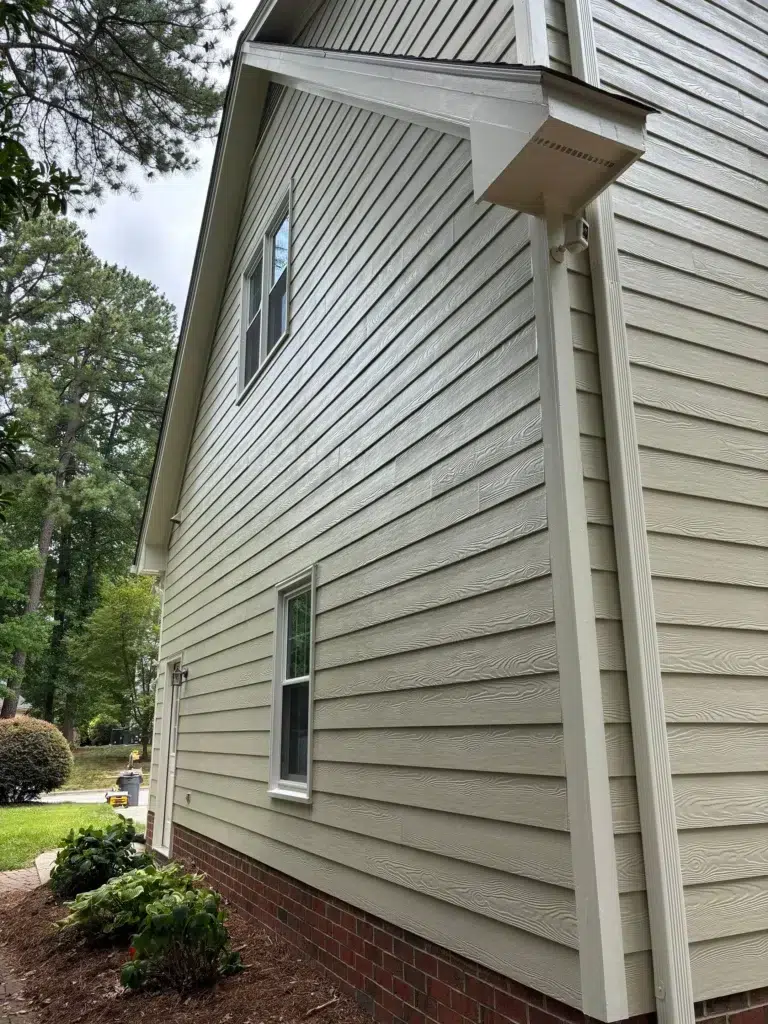
Exterior paint failure rarely happens all at once. The first signs are usually subtle and easy to overlook during routine maintenance.
Check these spots on your home regularly:
Catching these early keeps a manageable repair from turning into a full repaint.
What Happens If You Ignore It
Exterior paint peeling in North Carolina is not just cosmetic. Left untreated, it can affect the structural integrity of wood siding or trim over time. Once moisture gets behind the paint and into the wood consistently, rot follows, which turns a painting job into a costlier carpentry repair.
If you plan to sell, a home inspector will note any peeling, flaking, or bubbling paint and try to identify the cause. If moisture is involved, they may recommend a more detailed inspection or flag it as a concern.
How to Actually Fix It (Not Just Cover It Up)
Fix the wrong cause and you will be looking at the same peeling spot within a season or two. A lasting repair follows a specific order:
For more on how the climate affects repaint timing, see our post on how often you should repaint. And to keep your paint healthy between jobs, our post on how to maintain painted walls walks through the specifics.
How Alvarez Painting Handles This the Right Way
At Alvarez Painting, Carlos Alvarez and his team have worked on Raleigh-area homes long enough to know that exterior paint peeling in North Carolina almost always comes back to two things: moisture and prep. That is why every exterior project starts with a thorough assessment of the surface before a brush or roller touches the wall.
The team follows a process built around this climate, not a generic checklist. That means checking caulk lines, evaluating wood condition, choosing products suited to North Carolina’s heat and humidity, and scheduling work around the weather. A workmanship warranty backs every job, giving homeowners a real safety net if something unexpected comes up.
If you have noticed bubbling, peeling, or fading and want a straight answer about the cause, reach out for a free consultation. We will look at what is actually happening with your paint and tell you exactly what it will take to fix it properly.
When you are ready, contact Alvarez Painting at 919-444-8997. Getting the details right from the start is what saves you time and money.