
Walking out to your Cary deck and noticing the wood has gone gray, soaking up water instead of shedding it, is the moment most homeowners realize they have waited too long to stain a deck. If you are researching the best way to stain a deck, or a previous attempt did not hold up the way you hoped, this post breaks down what works, what does not, and what separates a finish that lasts from one that peels before the season ends.
Key Takeaways
- Prep, which means cleaning, drying, and sanding, determines how long your stain will last.
- Stain type (transparent, semi-transparent, or solid) directly affects your reapplication schedule.
- North Carolina’s heat and humidity narrow your ideal application window.
- New pressure-treated lumber needs months to dry before stain will properly absorb.
- A simple water bead test tells you when it is time to restain.
- Professional application often produces longer-lasting results than a rushed DIY project.
Why Your Deck Needs More Attention in NC’s Climate
Cary homeowners deal with a specific weather combination that makes deck maintenance a real priority. Hot, humid summers bring afternoon thunderstorms and persistent moisture, while mild but wet winters mean the wood barely gets a break from rain and temperature swings. That ongoing cycle of heat, rain, and UV exposure speeds up graying, cracking, and mildew growth on unprotected wood.
Stain is not just cosmetic. It penetrates the wood and creates a barrier against moisture and UV damage. When that barrier wears down, and in NC it wears down faster than in drier climates, the wood absorbs water, swells, contracts, and eventually splinters or rots.
Stain is the better choice for most wood decks in NC’s climate, because it soaks into the wood rather than coating the surface, wears more gradually, and is easier to reapply without stripping. Paint, by contrast, peels as wood expands and contracts through the seasons, which means more intensive prep at every maintenance cycle. For a backyard deck that gets real use, knowing the best way to stain a deck keeps you in a manageable routine instead of a major overhaul every few years.
Check Your Deck’s Condition Before You Start
The best approach always starts before you open a can of stain, because you need to know what you are working with. Walk the full deck surface and look for raised fasteners, cracked or rotted boards, pooled-water stains, and spots where mildew has set in. Any rotted boards need replacing first, since rotted wood will not hold stain and will not last.
For new pressure-treated lumber, patience matters. It should dry for at least 6 months before stain or any wood treatment is applied. A good test is to pour water on the boards: if it beads up, the wood is still too wet, and if the water soaks in, it is ready for staining.
Choosing the Right Stain: Which Type Works Best?
Stain type is one of the most important decisions in the process, and it directly affects how often you will need to come back and redo the work.
Transparent Stains
Transparent stains let the wood grain show fully, which makes them popular on newer decks with attractive wood. The tradeoff is the least UV protection of any option, so they generally need reapplication every year.
Semi-Transparent Stains
Semi-transparent stains add color while still showing the grain, balancing appearance with real protection. That is why they are the most popular choice for most residential decks. On deck boards, plan on recoating every 2 to 3 years, while vertical surfaces like railings and posts can hold 3 to 5 years between applications.
Solid Stains
Solid stains provide the most coverage, giving rich, opaque color while still soaking into the wood fibers. That delivers close to the durability of paint with more of the breathability of a stain, and quality solid stains can last 5 to 7 years with proper prep and maintenance. Solid stain is a smart choice for older, weathered Cary decks with inconsistent color or surface imperfections.
Living in the Triangle means humidity, summer storms, and direct sun all speed up wear, which is why many Garner, Raleigh, and Cary homeowners choose stain for its moisture resistance. If you are unsure which type fits your boards, a professional deck staining service can match the product to your deck’s age and exposure.
Best Way to Stain a Deck: Prep Steps That Last
Prep is where a deck staining project is won or lost. A clean surface lets stain soak in and cure properly, while dirt, mildew, algae, and old finish act as barriers that cause premature peeling, uneven color, and poor adhesion.
Start with a deck cleaner and a low-pressure wash, using a PSI of 1,200 to 1,400 and a 45° tip. Spray along with the wood grain to avoid damaging the surface. After washing, apply a deck brightener or oxalic acid wash, which lowers the wood’s pH, opens the pores, and leaves a more receptive surface for stain.
Once clean, let the deck dry completely. In the Raleigh area’s humid climate, that usually means 48 to 72 hours, and longer for shaded areas. Stain applied to damp wood will not adhere well and can crack or peel, so rushing this step is one of the most common mistakes homeowners make.
After drying, sand the boards with 80-grit sandpaper to remove loose fibers and smooth any raised grain from washing. That gives the stain a more even surface to grip.
Deck Stain Application Methods That Work
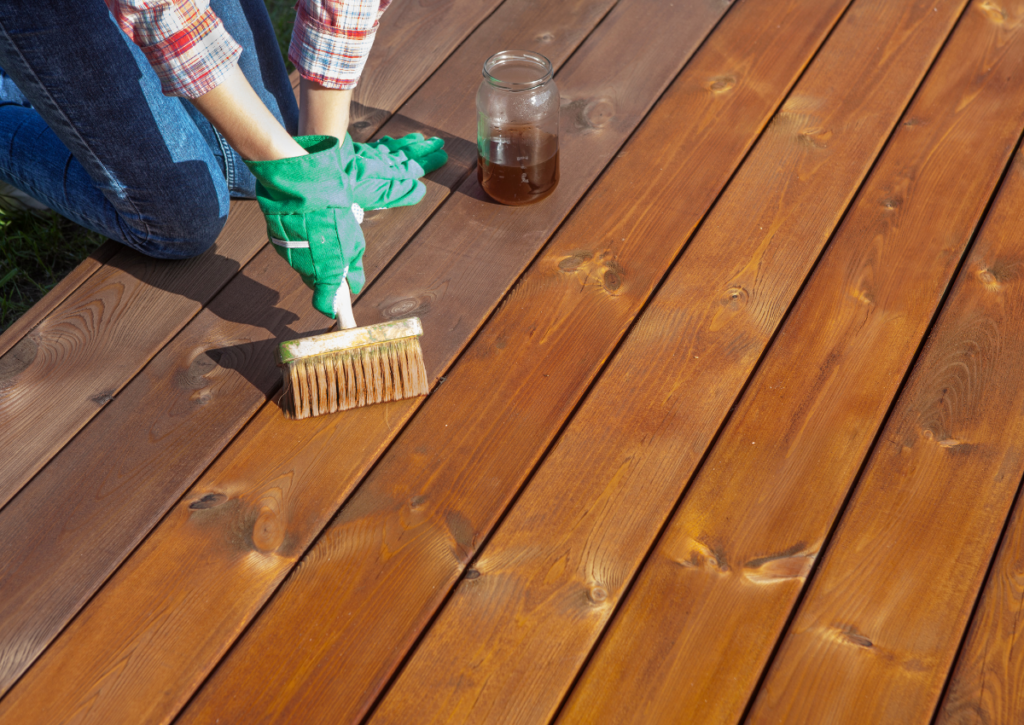
Once your deck is clean, dry, and prepped, how you apply the stain matters just as much. The best way to stain a deck is to start with the vertical surfaces, the railings, posts, balusters, and stairs, using a natural bristle brush that works stain into the wood fibers.
Work in long, even strokes and pay attention to the end grain on board edges, which absorbs stain faster and can look blotchy if rushed. Cover the deck boards below with drop cloths to catch drips while you stain the railings.
For the boards themselves, a paint pad applicator on a pole covers large areas quickly. It is less tiring than brushing a whole deck by hand and more accurate than a sprayer. Always follow the pad or roller with a brush to push the stain into the grain, a step known as back-brushing, which improves penetration and evens out the finish.
Keep in mind that more stain is not better. Over-applying can leave a sticky surface that will not dry, or stain that peels and cracks once moisture hits it. One even coat, applied properly, consistently outperforms a rushed double coat.
Timing Your Project in the Raleigh Area
Staining in the wrong conditions can be just as damaging as skipping prep, so timing makes a real difference in how long the finish holds. Most deck stains are best applied between 50°F and 90°F, where the stain dries and cures effectively.
Temperatures above 90°F can flash-dry the stain, causing poor penetration and an uneven finish. North Carolina’s summer heat regularly pushes past that mark by mid-morning in July and August, so on hot stretches, work early and stop before the surface heats up. High humidity creates the opposite problem, and levels over 70% can prolong drying and lead to uneven curing.
The best windows in the Raleigh area are late spring, roughly April through June, and early fall, September through October, when temperatures are moderate and humidity is lower. Avoid staining if rain is expected within 24 to 48 hours, since it interferes with proper drying. Our post on exterior paint temperature requirements covers how NC’s climate affects exterior coating timelines.
How Often Should You Restain a Deck in NC?
Here is a quick test every deck owner should know: sprinkle a handful of water on the boards. If it beads up and rolls off, your finish is still doing its job, and if it soaks straight in within a few minutes, the deck is telling you it needs attention.
Watch for fading color, a grayish tone across the boards, or areas that look dull and dry compared to when the stain was fresh. To keep an older deck protected, plan to restain every 2 to 3 years. Decks in full sun or with heavy foot traffic near stairs and doors may need attention every 1 to 2 years, especially if a lighter stain was used.
For broader context on how NC’s weather cycles affect exterior finishes, see our guide on how often to paint your house.
DIY or Hire a Pro to Stain Your Deck?
Staining a deck yourself is doable, but prep, timing, and technique all have a direct impact on how long the results last. Cutting corners on cleaning, skipping the brightener, or staining on a hot, humid afternoon can take a year or more off the life of the finish.
The process is also genuinely time-consuming, and a smooth, even result depends on getting every stage right. For homeowners who want it done right the first time, a professional crew handles the prep correctly, chooses products suited to the wood and the local climate, and applies them efficiently. You can see the real numbers in our DIY versus hiring exterior painting contractors breakdown.
If you are weighing the same question for another surface, our post on whether to paint or stain a fence covers the tradeoffs for a different type of wood.
Decks remain one of the most valued outdoor features among homeowners. According to the NAHB outdoor living trends report, decks were a desired feature for 55% of the design professionals surveyed, behind only covered outdoor rooms and patios. Protecting that investment with the best way to stain a deck is one of the most cost-effective maintenance steps available.
Ready to Protect Your Cary Deck the Right Way?
If your deck is showing signs of wear, like water soaking in, boards going gray, or fading color, Alvarez Painting can take a look and give you a straight answer about what it actually needs. As a local, family-owned painting and staining company serving Cary, Raleigh, Apex, and the surrounding communities, we walk every deck before any work begins, prep it correctly, and apply stain in conditions that let it cure properly. Our work is backed by a 6-month workmanship warranty, and what we quote is what you pay.
When you want the best way to stain a deck handled start to finish, we are ready to help. Call 919-444-8997 for a FREE estimate today, and get a fresh, well-protected deck before the rest of NC’s summer sets in.