If you have ever stood in a paint aisle staring at sheen labels, you are not alone. The debate around satin paint vs. matte paint comes up on nearly every interior project we see. Both finishes look great in the right setting, but they behave very differently once they are on the wall.
This guide breaks it all down in plain terms. We will walk through how satin paint vs. matte paint compares in real homes, how light and traffic affect each finish, and where homeowners tend to make mistakes. By the end, you will know which option fits your space and why it matters long after the paint dries.
Key Takeaways:
- Satin paint vs. matte paint is mainly about sheen, with satin reflecting more light and matte softening the look of walls.
- Satin paint holds up better in busy areas and handles light cleaning more easily than matte finishes.
- Matte paint hides wall imperfections better, making it a strong choice for large wall surfaces and ceilings.
- Lighting changes how each finish looks, so room exposure matters when choosing between satin paint vs. matte paint.
- Many homes use both finishes strategically rather than relying on one sheen throughout the entire space.
What Really Separates Satin Paint Vs. Matte Paint
At the most basic level, the difference between satin paint vs. matte paint comes down to light reflection and resin content. Satin paint has more resins, which gives it a soft shine and added durability. Matte paint has very little sheen, so it absorbs light rather than reflecting it.
That one difference affects everything else. It changes how walls look in daylight, how easy they are to clean, and how well they hide surface flaws. Once you understand this, the choice starts to feel much simpler.
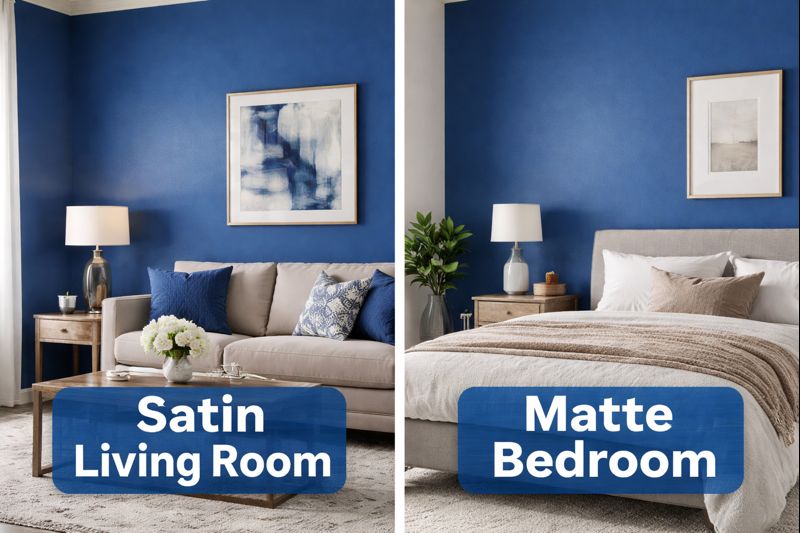
How Light Changes The Look Of Each Finish
Lighting plays a bigger role than most people expect when comparing satin paint vs. matte paint. A finish that looks perfect in one room can feel wrong in another just because of sunlight.
Satin Paint In Bright Rooms
Satin reflects light, which can make colors feel richer and more defined. In rooms with a lot of natural light, this reflection can also highlight surface texture, drywall seams, or past repairs. In west or south facing rooms, satin can appear shinier than expected during peak sunlight hours.
Matte Paint In Low And Moderate Light
Matte absorbs light, which helps soften the look of walls. It tends to downplay small dents, patch marks, and uneven drywall. In spaces with limited natural light, matte can feel calm and even, though it may slightly darken the room compared to satin.
If you are comparing options across multiple rooms, it helps to understand how different paint sheens behave under changing light conditions rather than choosing one finish for the entire house.
Durability And Daily Wear Matter More Than You Think
One of the most practical differences in satin paint vs. matte paint shows up after the room is back in use. Walls get touched, brushed against, and occasionally bumped.
Why Satin Holds Up Better
Satin paint forms a tighter surface once cured. This makes it more resistant to scuffs and marks in busy areas like hallways, stairwells, and family rooms. It also handles light cleaning better, which matters in homes with kids or pets.
Where Matte Falls Short
Matte paint does not handle repeated contact as well. Because the surface is more porous, scuffs can show faster and cleaning can leave visible marks. While newer formulas have improved, matte still performs best in lower traffic spaces.
This is why many homeowners mix finishes throughout the home rather than choosing only one when weighing satin paint vs. matte paint.
How Each Finish Handles Surface Imperfections
Walls are rarely perfect, especially in older homes. When comparing satin paint vs. matte paint, how forgiving the finish is should be high on your list.
Matte paint is excellent at masking minor flaws. Small nail holes, uneven texture, and patched areas tend to blend in better. This makes it a popular option for large wall surfaces and ceilings.
Satin paint does the opposite. Its light reflection makes surface details more visible. Clean drywall work looks great under satin, but rushed prep will stand out quickly.
Surface prep and coats of primer play a major role here, especially when moving from a flat or matte finish to satin.
Cleaning And Maintenance Expectations
Another key factor in the satin paint vs. matte paint decision is how the walls will be maintained over time.
Satin paint handles light cleaning without breaking down the finish. This makes it practical for areas where fingerprints, splashes, or marks are more common.
Matte paint requires a gentler approach. While some newer matte paints tolerate wiping better than older versions, aggressive cleaning can still change the appearance of the wall. Touch ups may also show more easily with matte.
Understanding these differences helps avoid frustration later, especially in high-use rooms.
Cost Differences Between Satin And Matte
Paint sheen also affects price. In most cases, satin paint costs slightly more per gallon than matte paint. The added resins and binders used to create sheen increase manufacturing costs.
While the price difference per gallon may feel small, it can add up on larger projects. Still, cost should not outweigh performance. Choosing a cheaper finish that does not hold up can lead to repainting sooner than expected.
If you are planning multiple rooms, using a paint calculator can help estimate material needs before finalizing sheen choices.
Color Depth And Visual Feel
Color behaves differently depending on sheen. This is another area where satin paint vs. matte paint creates noticeable contrast.
Matte paint tends to make colors look deeper and softer. Dark colors often feel richer and less reflective, which works well in bedrooms and offices.
Satin paint adds a slight glow to colors. Lighter shades feel brighter, and bold colors can look more vibrant. This can be a benefit or a drawback depending on the space.
When homeowners are considering updates influenced by trending home paint colors, sheen selection plays a big role in how those colors actually appear on the wall.
Where Each Finish Typically Works Best
Rather than asking which is better overall, a better question is where each finish performs best.
Common Uses For Satin Paint
-
Hallways and staircases
-
Living rooms and family rooms
-
Kitchens and laundry areas
-
Doors, trim, and window frames
Common Uses For Matte Paint
-
Bedrooms
-
Dining rooms
-
Offices
-
Ceilings and large wall expanses
Many homes use both finishes strategically. This balanced approach often delivers the best long term results when comparing satin paint vs. matte paint.
Mistakes Homeowners Often Make With Sheen Choices
Even with good information, sheen mistakes still happen. These are some of the most common ones we see.
-
Using satin on walls with poor surface prep
-
Choosing matte in high traffic areas
-
Assuming all matte paints clean the same
-
Using one sheen everywhere without considering room function
Each of these can affect how the paint performs and how satisfied homeowners feel months later.
How Professional Painters Approach Sheen Selection
Experienced painters rarely choose sheen in isolation. We look at wall condition, lighting, room use, and color together. The satin paint vs. matte paint decision is part of a bigger system rather than a standalone choice.
For example, satin may be used on walls while trim receives a higher gloss for contrast. Matte may be paired with carefully selected lighting to avoid a dull look. Prep methods, primers, and application techniques are adjusted based on sheen.
This approach helps finishes look intentional and age better over time.
Final Thoughts On Satin Paint Vs. Matte Paint
Choosing between satin paint vs. matte paint is less about trends and more about how each space functions. Satin offers durability and easier maintenance, while matte provides softness and flaw coverage. Most homes benefit from using both finishes in the right places rather than forcing a single solution everywhere.
When sheen decisions are made with lighting, traffic, and surface condition in mind, the result feels cohesive and long lasting. That is where professional guidance makes a real difference.
At Alvarez Painting, we take a practical approach to every project. Our process focuses on long term performance, not just how the paint looks on day one. Our team includes expert painters in Columbia, MO who evaluate walls, lighting, and daily use before recommending finishes.
Here is how we approach it:
-
Walk through each room and discuss how it is used
-
Evaluate wall condition and prep requirements
-
Select finishes that balance appearance and durability
-
Apply professional surface preparation and priming
-
Finish with clean, consistent application
If you are planning an interior painting project in Cary, Raleigh, Apex, and the surrounding areas, we are here to help.
Call us at 919-444-8997 for a FREE estimate and clear guidance on satin paint vs. matte paint that fits your home, not just the label on the can.