Pick up any home improvement guide and you’ll find the same oil vs latex exterior paint comparison recycled over and over. Most of them give you a generic answer that doesn’t account for where you actually live.
That’s a problem when you’re in Raleigh.
North Carolina’s summers are humid, long, and hard on exterior surfaces. The combination of high heat, moisture, and afternoon rain from June through September creates conditions that expose the real difference between these 2 paint types faster than most climates do. Choosing the wrong one for your home’s surface doesn’t just affect how it looks. It affects how soon you’re calling painters again.
Quick Takeaways:
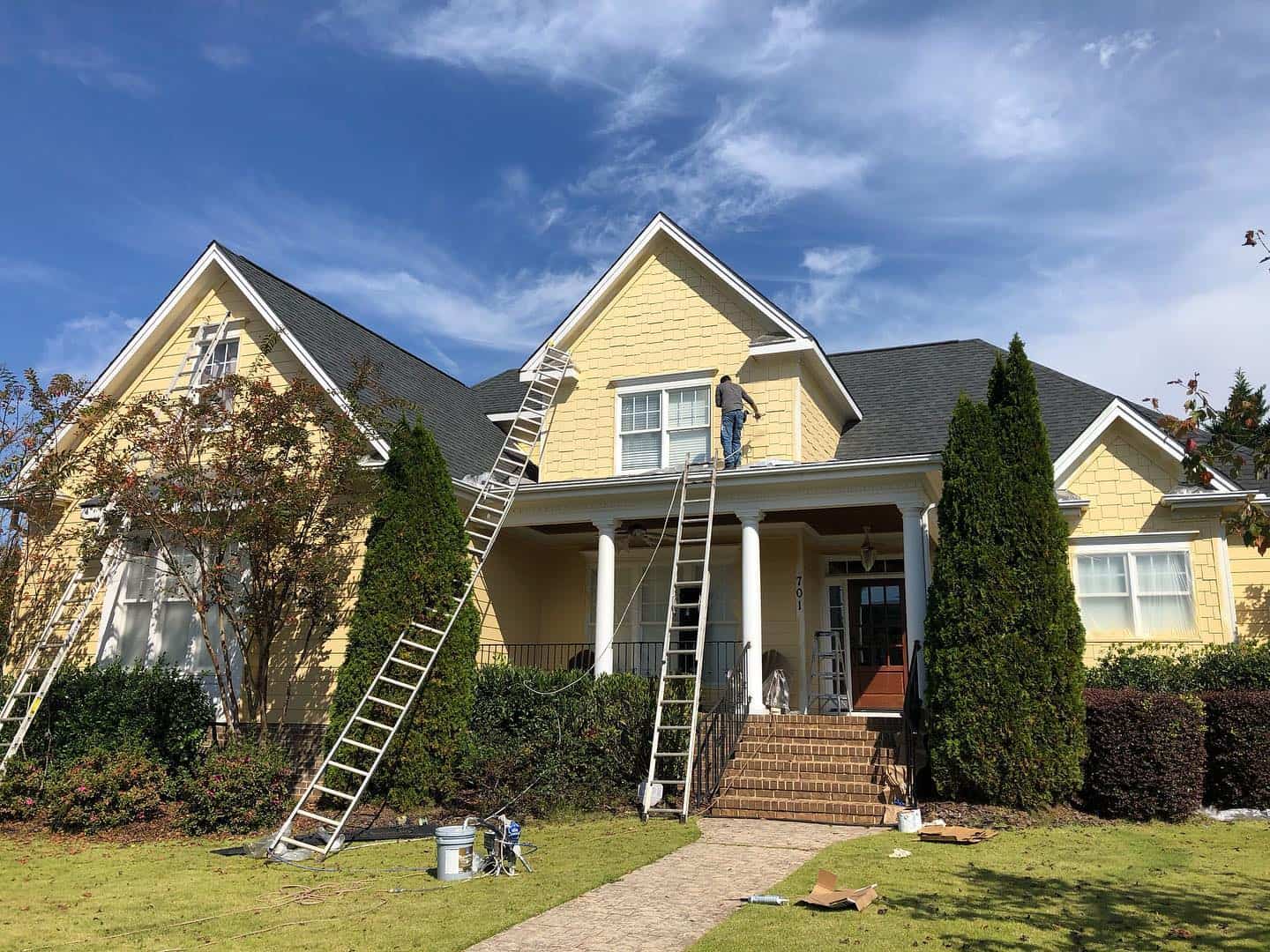
What Makes Oil and Latex Exterior Paint Different
Most homeowners think the difference between oil and latex is just about cleanup or smell. The real difference goes deeper than that, and it’s what drives every performance gap between the 2.
Oil-based paint uses an alkyd resin as its binder. It cures through oxidation, meaning it hardens as it reacts with oxygen in the air over time.
Latex paint, also called acrylic or water-based paint, uses water as its carrier and cures as that water evaporates and the acrylic polymers bond together. That difference in how they cure is what drives how each one performs on your home’s exterior over the years.
Oil vs Latex Exterior Paint: How Each One Performs
Both paints have situations where they work well and situations where they fall short. Breaking them down by performance category makes the decision clearer than picking a flat winner.
Flexibility and How They Handle North Carolina Weather
This is the most important performance difference for homes in the Raleigh area.
Wood siding, trim, and other organic materials absorb moisture and expand when humidity rises, then dry out and contract when conditions change. That cycle happens constantly in North Carolina, and it puts real stress on whatever is coating those surfaces.
Latex paint stays flexible after it cures. It moves with the surface as it expands and contracts, which means it doesn’t crack under that stress. Oil-based paint cures to a harder, more rigid film. That rigidity works fine in stable conditions, but in a climate with wide swings between wet and dry, it becomes a liability over time.
Research from the Paint Quality Institute shows that 100% acrylic latex consistently outperforms oil-based paint in exterior applications across climates with high humidity and temperature variation. For most Raleigh-area homes, that finding alone is worth paying attention to.
Cure Time and What It Means for Your Project
Oil-based paint takes 24-48 hours to dry to the touch and up to 7 full days to cure between coats. In a climate where afternoon rain can show up without much warning, that window is a real scheduling challenge for painters working on your exterior.
Latex dries in 1-2 hours under normal conditions and can take a second coat the same day. Faster cure time means less exposure to weather mid-project and more control over the outcome from start to finish.
If you want to understand how paint type connects to overall project planning and cost, our post on what affects exterior painting cost covers that in full.
Where Oil-Based Paint Still Has an Edge
Latex wins on flexibility and scheduling, but oil-based paint holds its ground in specific situations.
On bare, heavily weathered, or porous wood surfaces, oil penetrates deeper into the material before curing. That penetration creates a stronger initial bond than latex typically achieves on the same surface without aggressive priming. This is why oil-based primers are still widely used even when the topcoat is latex.
If your home has bare wood, sanded areas, or surfaces stripped back to raw material, that combination of an oil-based primer with a latex topcoat is still a solid approach. Our post on paint primer and how it affects adhesion explains why that first layer has such a large impact on how the finish holds long term.
VOC Content and What It Means Day to Day
VOCs, or volatile organic compounds, are the chemical compounds that evaporate as paint cures. Oil-based paints carry significantly higher VOC levels than latex, which is why they produce stronger fumes during and after application.
The EPA’s guidance on VOC emissions from architectural coatings notes that solvent-based oil paints can carry VOC concentrations 5-10 times higher than water-based latex alternatives. That affects ventilation needs during the project, how long areas need to air out afterward, and compliance with local air quality regulations.
Cleanup is also a daily factor. Oil-based paint requires mineral spirits or paint thinner to clean brushes and equipment. Latex cleans up with soap and water. For a multi-day exterior project, that difference in cleanup time and material cost adds up. Our post on sustainable painting practices for modern homes covers how lower-VOC choices connect to better air quality outcomes inside and outside the home.
Finish Quality and Color Stability Over Time
Oil-based paint self-levels well during application and dries to a smooth, hard finish. On trim, doors, and detailed woodwork, that smoothness is noticeable. It also resists scuffs on high-contact surfaces better than standard latex.
The trade-off is yellowing. Oil-based paint oxidizes as it ages, and that process creates a yellow cast over time. On whites and lighter colors, it becomes visible within 4-6 years. That’s a real issue on home exteriors where color consistency across the full surface matters.
Premium acrylic latex has closed most of that quality gap over the past decade. Sherwin-Williams Duration Exterior uses advanced acrylic binder technology that holds color significantly better under UV exposure than oil-based alternatives. On large exterior surfaces where you need that color to stay consistent for 8-10 years, that stability is a practical advantage.
Where Oil-Based Paint Still Makes Sense
Despite latex being the standard for most exterior surfaces today, there are situations where oil-based products are still the better call:
- Painting over existing oil-based paint where full stripping isn’t practical
- Bare or heavily weathered wood that needs deep penetration before a topcoat
- Metal surfaces like railings, storm doors, or decorative ironwork where hardness and rust resistance matter
- High-traffic horizontal surfaces like porch floors that take constant foot contact and need durability above flexibility
Outside of those situations, most professional painters default to high-quality latex for exterior siding and trim. It holds up better over time in North Carolina’s conditions and is easier to maintain across the life of the finish.
How to Figure Out Which One Is Right for Your Home
Start with what’s already on your siding. If you don’t know whether previous paint was oil or latex, there’s a simple test. Rub a cotton ball soaked in rubbing alcohol over a small painted area. If paint transfers onto the cotton, it’s latex. If nothing comes off, it’s likely oil-based.
From there, your surface type and condition guide the rest of the decision:
- Wood siding in good condition: Premium acrylic latex with a quality primer
- Bare or weathered wood: Oil-based primer, latex topcoat
- Vinyl or fiber cement siding: Latex formulated for low-porosity surfaces
- Metal details or trim: Oil-based or alkyd hybrid products
Timing matters too. Latex needs temperatures above 50°F to cure correctly. In North Carolina, that rules out exterior painting from around mid-November through early March under typical conditions.
For homes in the Raleigh area, proper prep before any paint goes on is what determines how long the finish holds regardless of which product your painters use. Our exterior house painting services include a full surface assessment before any product is selected, so the right paint goes on the right surface from day one. For homeowners across Raleigh, NC and the surrounding area, getting this decision right upfront is what separates a finish that holds for a decade from one that needs attention in 3 years.
Call us at 984-334-0351 for a FREE estimate today. The painters at Alvarez Painting will assess your surfaces, walk you through the right product for your home, and give you a clear, honest quote with no surprises.