Most people focus on the paint color. That is the exciting part of a painting project.
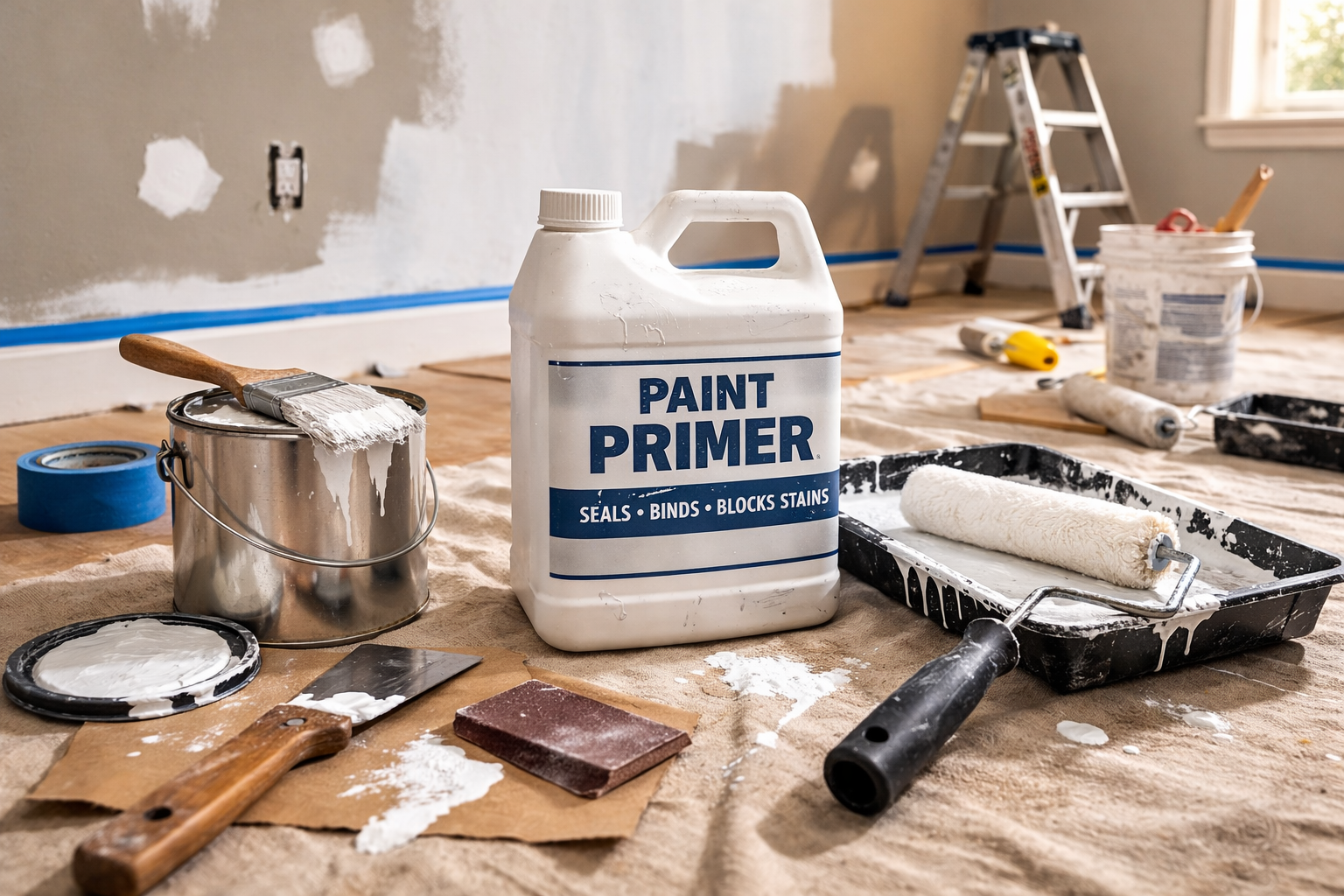
But the part that determines how well the paint actually performs is usually hidden underneath it. That layer is called paint primer, and it plays a much bigger role than many homeowners expect.
Without primer, paint can struggle to bond with the surface. Colors may look uneven, stains may bleed through, and coatings may wear down sooner than expected. With the right paint primer, the surface becomes stable, consistent, and ready for the final coats.
So while paint delivers the color, paint primer is what makes the entire system work.
Key Takeaways:
What Paint Primer Actually Does
To understand paint primer, think of it as the foundation layer of a paint system.
Paint is designed mainly for appearance and protection. Primer is designed to bond with difficult surfaces and create a stable base for the top coat.
Without that base, paint may sit on the surface instead of properly attaching to it.
Primer helps solve several common problems:
- Uneven surface texture
- Stains bleeding through paint
- Poor adhesion on slick or glossy surfaces
- Color inconsistencies from old coatings
By sealing the surface and creating a uniform layer, paint primer allows the top coat to spread evenly and bond properly.
Why Paint Alone Cannot Do The Same Job
A common question homeowners ask is simple. If paint already covers the wall, why use primer first?
The answer comes down to chemistry.
Paint contains pigments and resins designed to provide color and durability. Primer, on the other hand, focuses on adhesion and surface sealing.
Without primer, paint can struggle in situations like:
- Raw drywall is absorbing paint unevenly
- Wood surfaces release natural tannins
- Metal surfaces are developing rust beneath the coating
- Previously painted glossy surfaces resist paint adhesion
When primer is applied first, the paint bonds to the primer instead of the unstable surface. That extra step helps the finish last longer.
The Different Types Of Paint Primer
Not every painting project requires the same type of paint primer. Different materials call for different formulas.
Modern primers are designed to work with specific surfaces.
Drywall Primer
Fresh drywall is highly porous. The paper surface and joint compound absorb paint at different rates, which can lead to uneven color and dull spots.
Drywall primer seals the surface before the paint is applied. Once sealed, the paint spreads more evenly and creates a consistent appearance across the wall. This helps the final color look smoother and more uniform.
Drywall primer also helps reduce the amount of paint needed. Because the surface is already sealed, the paint stays on the surface rather than soaking into the wall.
Wood Primer
Wood surfaces can create their own challenges during a painting project. Natural wood often contains tannins and oils that can bleed through paint over time.
This is especially common with cedar, redwood, and other natural woods. When paint is applied directly to these surfaces, stains may slowly appear through the finish.
Wood primer blocks those tannins before they reach the paint layer. It also improves adhesion by creating a stable surface for the paint to bond with. Another benefit is that primer helps fill the pores in the wood grain, which allows the paint to dry with a smoother appearance.
Metal Primer
Metal surfaces require a specialized type of paint primer because they are smooth and nonporous. Paint alone can have difficulty bonding to metal without a primer layer.
Metal primers are designed to attach tightly to the metal surface. They also contain ingredients that help prevent rust and corrosion.
When the primer is applied first, it creates a protective barrier between the metal and the surrounding environment. Once that barrier is in place, the paint can bond to the primer instead of the metal itself.
Masonry Primer
Masonry materials such as concrete, brick, and stucco behave differently from wood or drywall. These surfaces are extremely porous and can absorb moisture easily.
If paint is applied directly to masonry, the coating can soak into the material and create uneven coverage.
Masonry primer seals those pores before the paint is applied. This helps the paint sit evenly on the surface instead of disappearing into the material. It also helps protect the wall from moisture intrusion, which can affect the durability of the paint system.
Using the correct paint primer for masonry surfaces helps create a more consistent coating while improving the long term performance of the paint.
How Paint Primer Improves Adhesion
Adhesion is one of the main reasons professional painters rely on paint primer.
Many surfaces are not ideal for paint to bond directly.
Examples include:
- glossy painted surfaces
- metal doors
- concrete walls
- previously stained wood
Primer creates a slightly textured surface that paint can grip onto.
This helps the coating stay in place over time, even with temperature changes, humidity, or normal wear.
In short, primer acts like the bridge between the surface and the paint layer.
Primer Helps Solve Stain And Odor Problems
Paint primer also works as a blocking layer.
Certain stains can bleed through paint even after multiple coats. Smoke stains, water damage, and markers are common examples.
Primer prevents those stains from migrating through the new paint layer.
It can also help seal odors trapped inside walls or ceilings. Smoke and pet odors sometimes linger in porous materials like drywall and wood.
A proper primer layer seals those areas before the finish coat is applied.
Why Primer Supports Long-Lasting Paint Systems
A well-applied primer improves the durability of the entire coating system.
Paint applied over primer tends to wear more evenly and maintain better color coverage over time.
This happens because the primer stabilizes the surface underneath.
Some benefits include:
- improved adhesion between paint layers
- more consistent color coverage
- reduced need for extra coats of paint
- longer-lasting finishes
When primer is skipped, these benefits are often lost.
Modern Paint Primer Technology
Paint technology has improved significantly in recent years. Modern paint primer products now combine several functions in one coating.
Some primers include mildew-resistant additives. Others are designed for difficult surfaces like glossy trim or previously painted cabinets.
Many modern primers are also water-based. These formulas reduce strong odors and allow easier cleanup with water rather than harsh solvents.
Some high-performance primers can even block stains while improving adhesion at the same time.
These improvements help create stronger paint systems with fewer application problems.
How Professional Painters Use Paint Primer
Professional painters rarely treat primer as an optional step. Instead, it is part of the full painting system.
At Alvarez Painting, the process begins with careful surface inspection. Every surface is evaluated before primer or paint is applied.
This helps determine the right primer for each material.
Our process often includes:
- Surface cleaning to remove dust and contaminants
- Sanding glossy areas with sandpaper to improve adhesion
- Repairing drywall or wood damage before painting
- Applying the correct paint primer for the surface
- Applying finish coats once the primer has fully cured
For homeowners searching for experienced painters in Cary, NC, this approach helps produce finishes that last longer and perform better over time.
A Simple Way To Think About Paint Primer
Paint primer may not be the most visible part of a painting project, but it often determines the final result.
It stabilizes surfaces, blocks stains, and allows paint to bond properly.
Without primer, paint may still look good at first. Over time, though, problems like peeling, uneven color, and reduced durability can appear.
With the right primer in place, the entire coating system works as intended.
Building A Stronger Paint System From The Start
Paint primer plays a major role in creating durable finishes that hold up over time. It prepares surfaces, improves adhesion, and prevents stains from affecting the final color. When primer is selected correctly, the paint system becomes stronger and more consistent from the first coat to the last.
At Alvarez Painting, our team focuses on the full painting process instead of just the final coat. Each project begins with proper preparation and the right paint primer so the finish performs well for years.
Our painting process includes:
- Careful inspection of surfaces before work begins
- Cleaning and sanding to improve adhesion
- Selecting the correct paint primer for drywall, wood, metal, or masonry
- Applying durable coatings designed for long term performance
- Final inspection to confirm consistent coverage
If you are planning a painting project and want results that last, our team is ready to help. Contact Alvarez Painting for professional painting services in Cary and the surrounding areas, or call 919-444-8997 for a FREE estimate.